

Entertainment
What Are the Best Strategies for Assassin’s Creed Shadows?


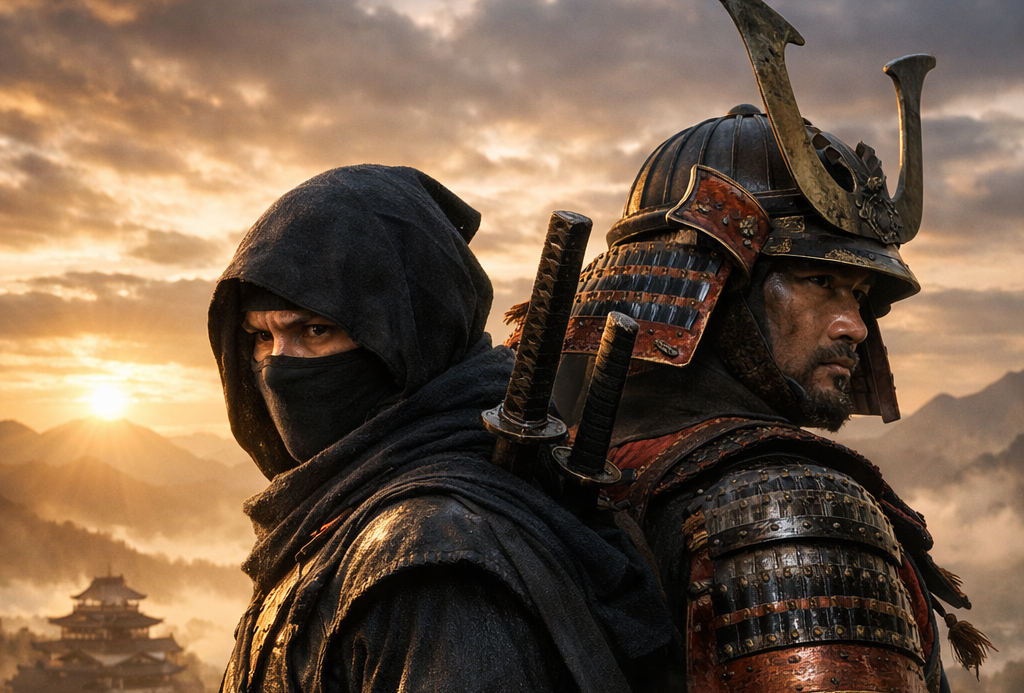
Introduction:
Assassin’s Creed Shadows on PC offers one of the most immersive feudal Japan experiences ever seen in a mainstream game, blending stealth, samurai combat, and deep role‑playing systems.
Playing on PC gives you finer control over graphics, frame rate, and key bindings, which means you can optimize both visual quality and responsiveness to match your hardware and playstyle.
This guide focuses on the main keyword Assassin’s Creed Shadows on PC, covering dual protagonists (Naoe and Yasuke), stealth and posture-based combat, open-world exploration with dynamic seasons, and PC settings like DLSS, FOV, VSync, and controls such as parkour with Spacebar and Eagle Vision with V.
The winds of change are blowing through the Assassin’s Creed series, carrying us to a long-awaited destination: feudal Japan. Assassin’s Creed Shadows isn’t just another historical tour; it promises a foundational shift in how we experience its world, driven by two distinct heroes and a landscape that literally changes with the seasons. For PC players, this means a unique opportunity to tailor the experience for maximum immersion and performance.
This guide is crafted to be your essential companion. We’ll move beyond the trailers and previews to give you a clear, expert breakdown of what to expect. From mastering the unique skills of shinobi Naoe and samurai Yasuke to optimizing your rig for the beautiful yet demanding landscapes of 16th-century Japan, we’ve got you covered. Let’s sharpen our katanas and ready our hidden blades.

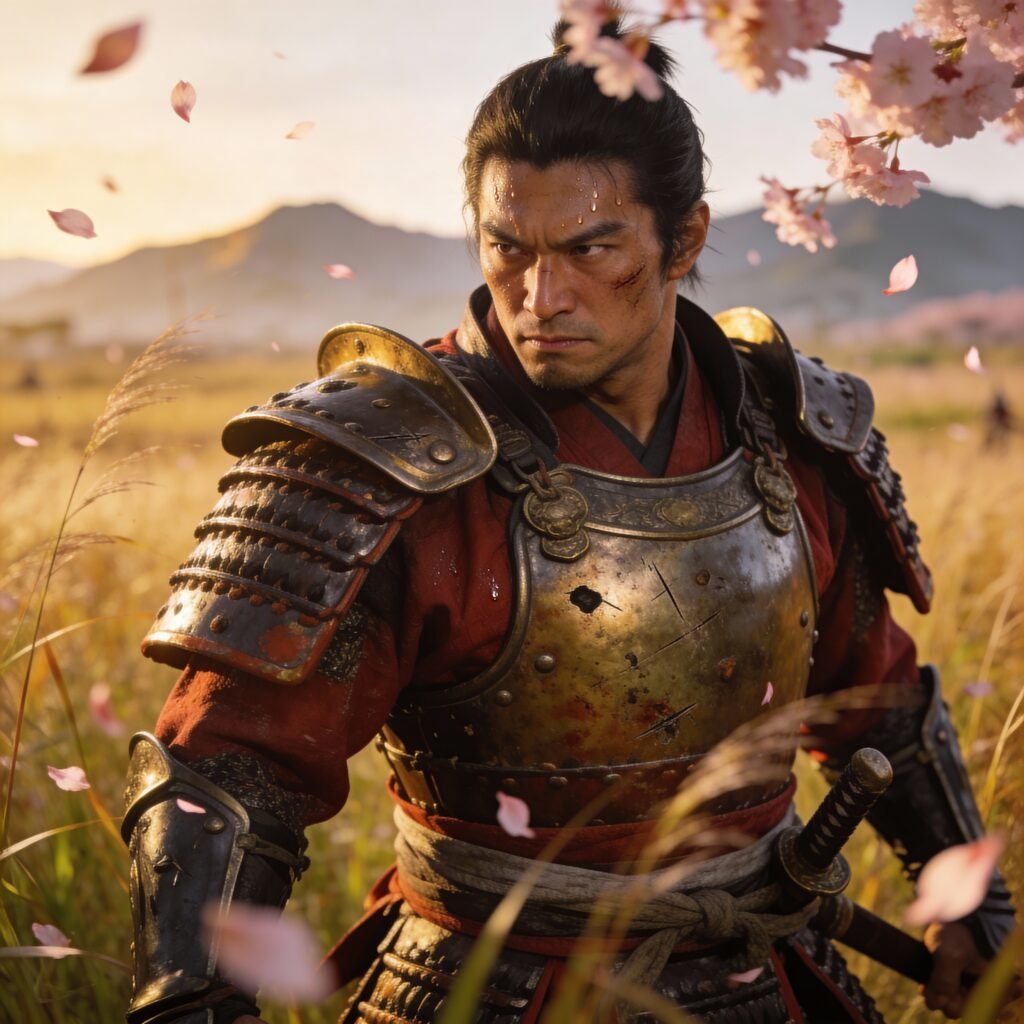
https://www.xda-developers.com/assassins-creed-shadows-essential-tips-tricks
The World of Assassin’s Creed Shadows on PC
Feudal Japan Setting and Theme
Assassin’s Creed Shadows is set in feudal Japan, a period defined by warring clans, strict social hierarchies, and shifting political alliances.
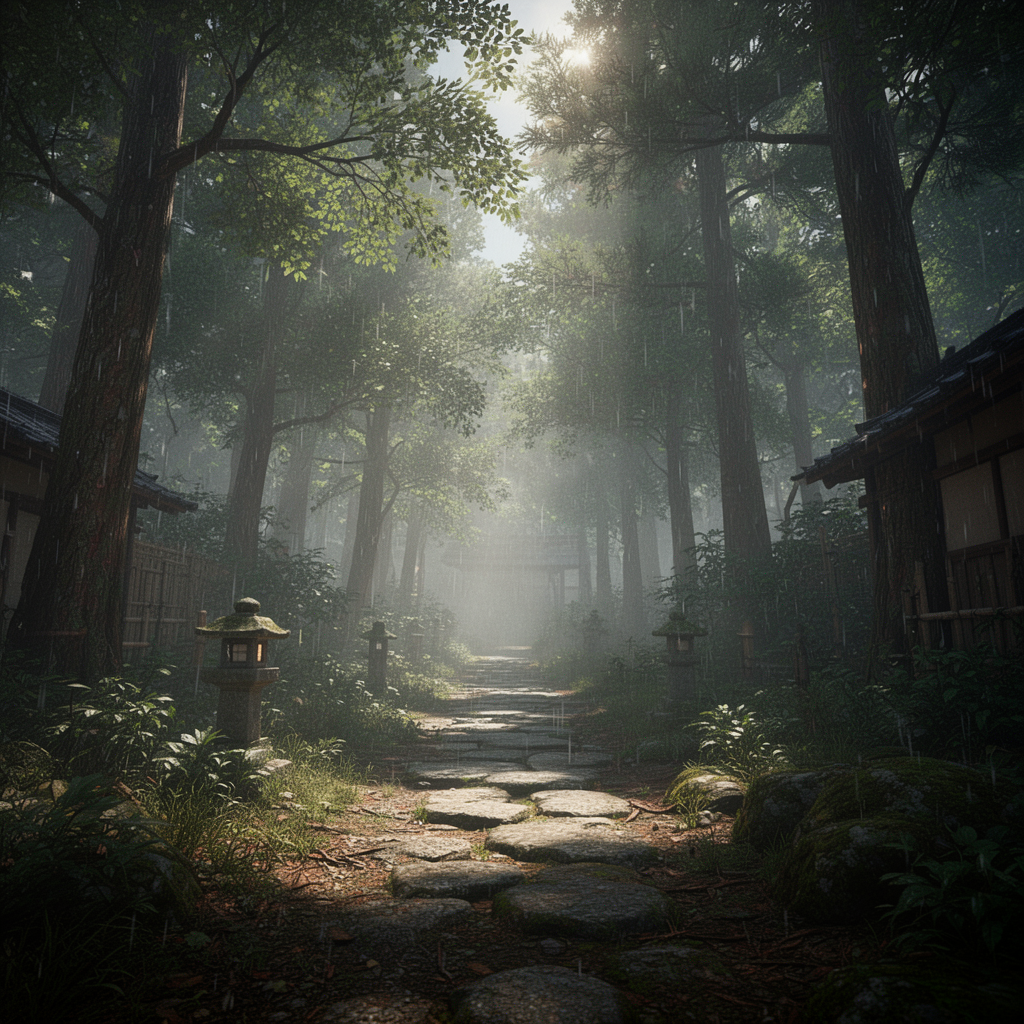
On PC, the detailed environments—from castle towns to remote villages and bamboo forests—benefit from higher resolutions and frame rates, making the historical atmosphere more convincing and engaging.
Dynamic Seasons and Weather
The game features dynamic seasons, meaning the world shifts between spring blossoms, summer greenery, autumn leaves, and winter snow, each affecting visibility, stealth routes, and enemy behavior.
On PC, these seasonal transitions can be emphasized with higher graphics settings, better shadows, and more detailed foliage, but performance tuning is crucial to avoid frame drops during intense weather effects.
Dual Protagonists: Shinobi Naoe and Samurai Yasuke
Naoe: Shinobi Stealth Specialist
Naoe is a nimble shinobi who excels in stealth, infiltration, and silent takedowns, making her ideal for players who prefer a subtle and tactical approach in Assassin’s Creed Shadows on PC.
Her toolkit often includes throwing weapons, smoke bombs, and grappling options, which pair well with high frame rates and responsive controls for precise timing on PC.
Yasuke: Armored Samurai Powerhouse
Yasuke is a heavily armored samurai who favors direct confrontations, powerful strikes, and posture-breaking combat instead of pure stealth.
Playing Yasuke on PC benefits from clear visual feedback and smooth animations, helping you read enemy posture meters, time parries, and manage multiple opponents effectively.
When to Use Each Protagonist
- Choose Naoe when:
- Choose Yasuke when:
Switching between them strategically is key to mastering Assassin’s Creed Shadows on PC, as different objectives and enemy setups reward different playstyles.
Stealth, Combat, and Posture System
Stealth Mechanics for Naoe
- Staying in tall grass, shadows, and behind objects to break enemy vision.
- Using tools like smoke bombs or noise distractions to isolate targets.
- Watching patrol patterns and striking when enemies are separated.
Higher frame rates and a wider FOV can help track multiple guards and monitor detection indicators more easily on PC.
Posture-Based Combat with Yasuke
Instead of relying solely on health bars, the combat focuses heavily on posture, both yours and the enemy’s.
- Attacking and parrying reduce enemy posture, eventually opening them up to finishing moves.
- Blocking too often or mistiming parries can drain your posture, leaving you vulnerable.
On PC, lower input latency and smooth frame pacing make it easier to read enemy animations for perfect parries and dodges.
Tools and Weapons
Both protagonists have access to a variety of tools and weapons that support different playstyles.
- Naoe:
- Yasuke:
Mapping these tools to comfortable keys or mouse buttons is one of the main advantages of playing Assassin’s Creed Shadows on PC.

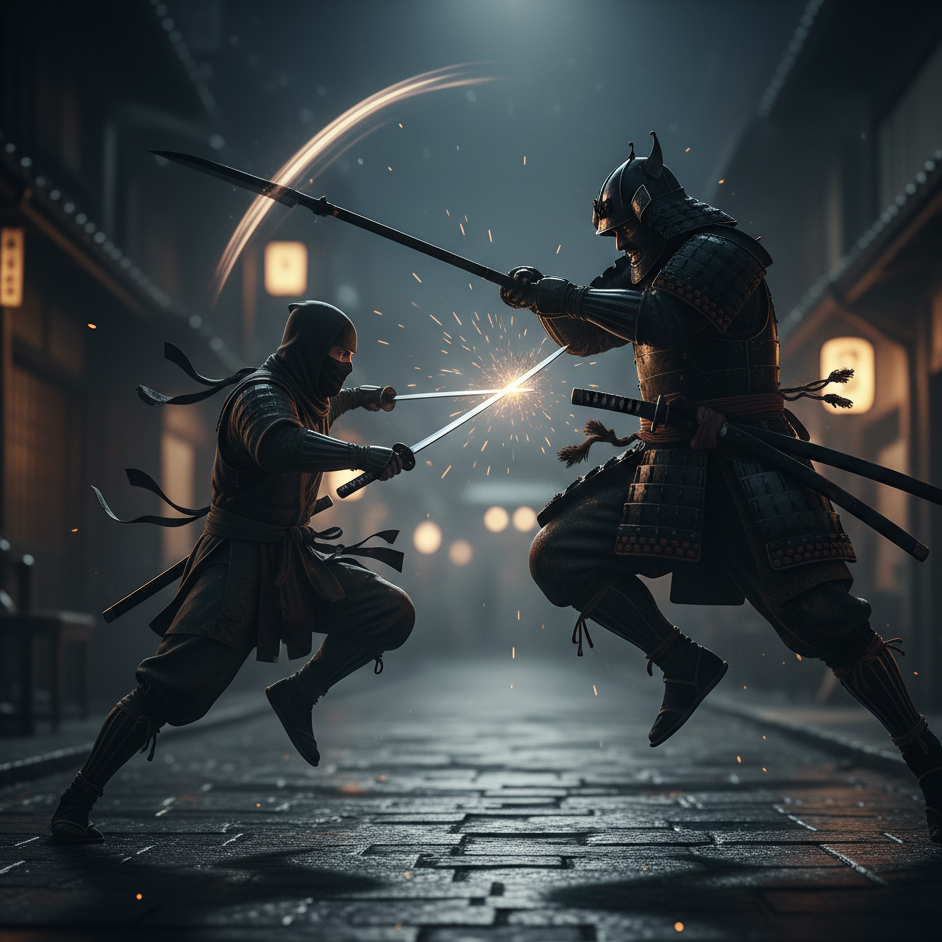
Understanding the Core of Shadows: Dual Protagonists
The heart of Assassin’s Creed Shadows beats with two rhythms. You don’t create a single character; you step into the lives of two predetermined, historically inspired figures with wildly different approaches. This isn’t a cosmetic choice—it fundamentally shapes your gameplay, story, and strategy.
Naoe: The Shinobi’s Path of Shadows
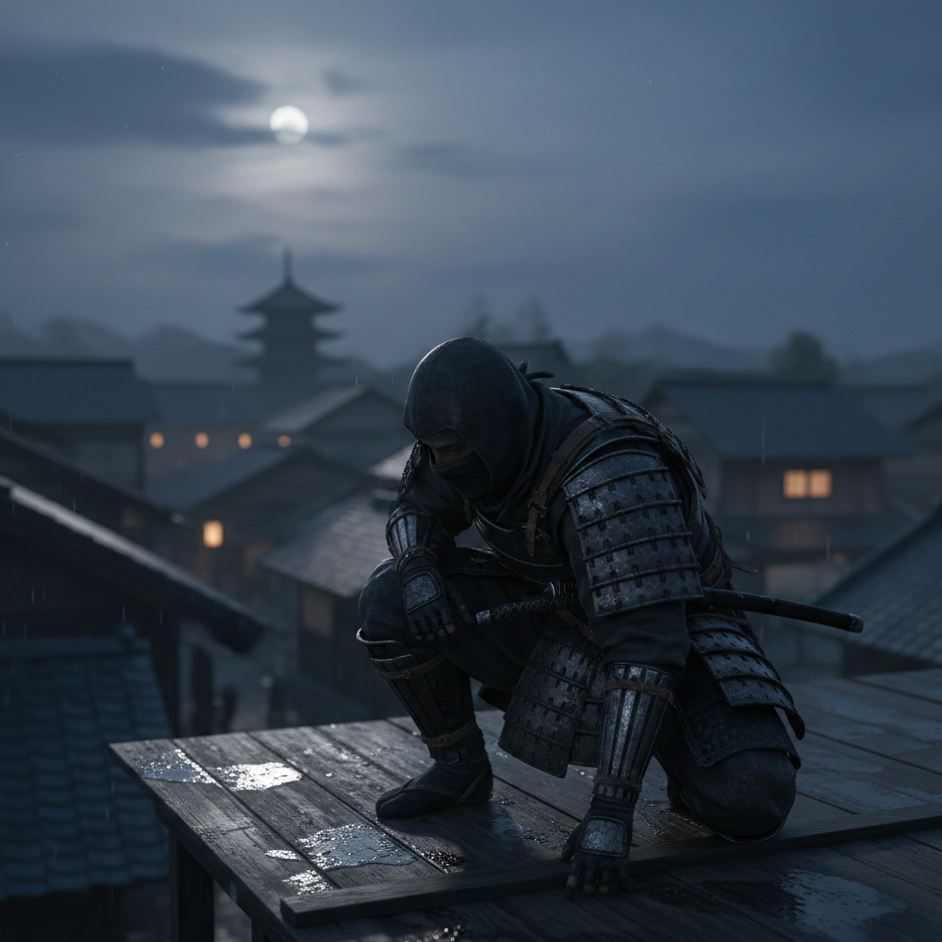
Naoe is the series’ classic fantasy realized in its most authentic setting. As a shinobi (the historical root of the term “ninja”), she is the master of stealth, agility, and subterfuge.
- Playstyle: Expect a focus on silent takedowns, parkour traversal across rooftops and treetops, and a deep toolset for misdirection and assassination. Her gameplay will likely emphasize avoiding direct confrontation.
- Key Abilities: Her signature tool is the Hidden Blade. She will also have access to smoke bombs, shurikens, and a grappling hook for vertical mobility. Her “Eagle Vision” equivalent might be more tactile—perhaps using a faithful animal companion or environmental cues to scout.
- Role in the World: Naoe operates from the shadows. She will infiltrate heavily guarded castles, eavesdrop on conversations, and eliminate targets without a trace. Her story will delve into the covert networks and espionage of the Sengoku period.
Yasuke: The Samurai’s Path of Honor
Yasuke brings a powerful, ground-shaking presence. Based on the real historical figure of the African samurai who served Oda Nobunaga, he represents raw power and front-line warfare.
- Playstyle: Yasuke is built for direct, impactful combat. He can wear heavier armor, break through enemy defenses, and engage multiple foes at once. The new Posture System (similar to Sekiro or Ghost of Tsushima) will be crucial here, where breaking an enemy’s stance leads to a deadly finish.
- Key Abilities: He masters a variety of Samurai Weapons like the katana, odachi (great sword), and kanabo (war club). His strength allows him to break down doors, manipulate heavy environmental objects, and perhaps even intimidate lower-level enemies.
- Role in the World: Yasuke walks through the front gate. He can engage in large-scale battles, challenge warriors to duels, and use his respected (or feared) status to influence the political landscape. His story explores honor, loyalty, and the tumultuous rise of warlords.
Switching and Synergy
You won’t be locked into one character. The game encourages—and likely requires—switching between Naoe and Yasuke to solve problems and approach missions from different angles. A fortress might be impregnable to Yasuke’s frontal assault but vulnerable to Naoe’s stealthy infiltration. The synergy between their skills is the ultimate strategic layer.
The Living World: Dynamic Seasons & Exploration
Shadows aims to make its open world a central character. The province of Azuchi is rendered with stunning detail, but its most innovative feature is Dynamic Seasons.
- Seasonal Impact: The world will transition through spring, summer, autumn, and winter. Each season dramatically alters gameplay. In summer, lush foliage provides perfect cover for Naoe. In winter, snowy landscapes will hold footprints, compromising stealth but also revealing enemy patrol paths. Frozen lakes might become new traversal routes or deadly traps.
- Exploration & Scouting: The age of the supernatural eagle is over. Scouting is now more grounded. You’ll likely use Naoe’s keen senses, environmental vantage points, or perhaps a smaller animal like a fox or bird to tag enemies and points of interest, making planning your approach more involved and immersive.
- Hideout Progression: As a base of operations, your hideout will evolve. You can recruit allies, upgrade facilities, and display collected items. This space will reflect your growing influence and serve as a narrative hub between missions.
Mastering Gameplay: Stealth, Combat, and Tools
Success in Shadows requires understanding its two intertwined gameplay pillars.
Stealth & Infiltration (Naoe’s Domain)
- Light and Sound: These are your primary concerns. Stick to shadows, extinguish lights, and be mindful of surfaces you walk on.
- Parkour & Traversal: The Parkour system is refined for Japan’s architecture. Expect fluid movement across pagoda roofs, bamboo forests, and castle rafters. The Spacebar (or your bound key) will be your best friend for climbing and escaping.
- Toolkit: Utilize Naoe’s tools creatively. Use noise-making devices to distract, smoke bombs to disorient and vanish, and her hidden blade for swift, silent kills.
Combat & the Posture System (Yasuke’s Domain)
- The Posture System: This is the core of direct combat. Both you and your enemies have a posture bar. Blocking, parrying (likely with a well-timed button press), and landing heavy attacks will drain enemy posture. When it’s broken, you can execute a devastating finisher.
- Weapon Mastery: Different Samurai Weapons have unique speeds, ranges, and posture damage. A katana is balanced, an odachi is slow but breaks posture easily, and a spear offers reach. Choosing the right tool for the enemy type is key.
- Aggressive Defense: Combat is about controlled aggression. Don’t just block; parry to create openings and proactively break your foe’s stance.
Optimizing Assassin’s Creed Shadows for PC
To fully appreciate the beauty and fluidity of this world, you need a stable, high-performance setup. Here’s what to focus on.
Essential PC Settings for Performance & FOV
PC players have the advantage of customization. Prioritize these settings for a smooth experience:
- Resolution & Refresh Rate: Match your monitor’s native resolution and max refresh rate.
- VSync: Consider turning this OFF if you have a G-Sync or FreeSync monitor to reduce input lag. If you experience screen tearing, enable it or use a frame cap.
- Field of View (FOV): A wider FOV slider is crucial, especially for fast-paced parkour and combat. Increasing it gives you better peripheral vision, making navigation and spotting enemies easier.
- Graphics Presets: Start with the “High” or “Optimized” preset based on your hardware (see table below), then adjust individual settings.
The Magic of DLSS and Upscaling Technologies
This will be a game-changer for performance. DLSS (Deep Learning Super Sampling) from NVIDIA uses AI to render the game at a lower resolution and then upscale it to your native resolution with minimal quality loss, granting huge frame rate boosts.
- If you have an RTX GPU: Always enable DLSS in its “Quality” or “Balanced” mode. It’s essentially free performance.
- For AMD GPUs: Look for FSR (FidelityFX Super Resolution) support.
- For Intel GPUs: Look for XeSS support.
Recommended PC Specifications (Estimated)
Based on recent Assassin’s Creed titles, here’s a projected guideline:
| Setting | 1080p / 60 FPS (Low-Med) | 1440p / 60 FPS (High) | 4K / 60 FPS (Ultra) |
|---|---|---|---|
| GPU | NVIDIA RTX 2060 / AMD RX 5600 XT | NVIDIA RTX 3070 / AMD RX 6800 | NVIDIA RTX 4080 / AMD RX 7900 XTX |
| CPU | Intel i7-8700K / AMD Ryzen 5 3600 | Intel i7-10700K / AMD Ryzen 7 5800X | Intel i7-12700K / AMD Ryzen 7 7800X3D |
| RAM | 16 GB DDR4 | 16 GB DDR4 | 32 GB DDR5 |
| Storage | SSD (100 GB+ recommended) | SSD (100 GB+ recommended) | NVMe SSD (100 GB+ recommended) |

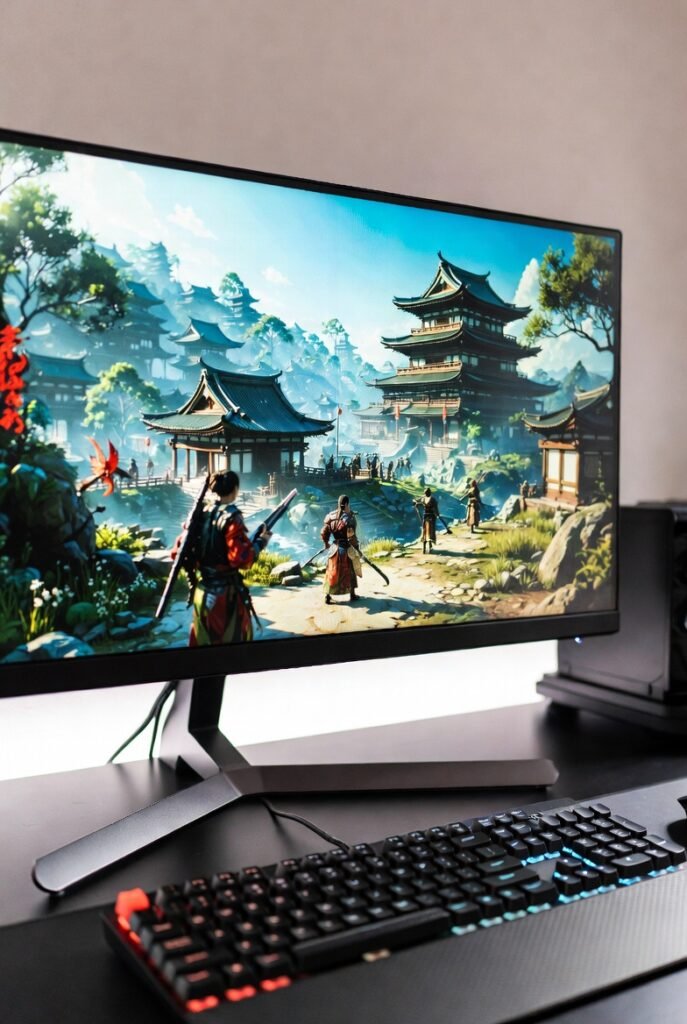
Open-World Exploration and Scouting
Exploring Feudal Japan’s Open World
Assassin’s Creed Shadows on PC features an open world filled with story quests, side missions, collectibles, and dynamic encounters.
Traversing cities, countryside, and fortresses via parkour, horseback, and stealth paths allows you to approach objectives in multiple ways, which is ideal for experimenting with PC controls and settings.
Scouting and Reconnaissance
Scouting is essential for planning attacks and avoiding unnecessary fights.
Common scouting techniques include:
- Using Eagle Vision (mapped to V) to highlight enemies, interactive objects, and hidden routes.
- Observing from high vantage points to mark targets and identify alarm systems or patrol routes.
- Sending scouts or using tools (depending on mission design) to reveal enemy layouts before committing.
Running Assassin’s Creed Shadows on PC with a clear image and tuned brightness makes scouting easier, as you can distinguish enemies and environmental details more reliably.
Parkour and Controls on PC
Core Movement and Parkour (Spacebar)
Parkour is central to Assassin’s Creed Shadows on PC, letting you climb walls, traverse rooftops, and navigate complex environments fluidly.
The Spacebar is typically bound to parkour or jump, so:
- Use it near climbable surfaces to automatically vault, grab ledges, or scale buildings.
- Combine directional keys with Spacebar to control the direction of your climbs and leaps more precisely.
Ensuring a high, stable frame rate makes parkour more responsive and predictable, reducing input misreads during tight jumps.
Eagle Vision (V) and Situational Awareness
Eagle Vision, usually mapped to V, acts as your detective tool, highlighting enemies, objectives, and interactive elements.
Using Eagle Vision frequently while exploring or preparing an infiltration ensures you rarely miss hidden entrances, weak points, or collectible items in Assassin’s Creed Shadows on PC.
Hideout Progression and Character Growth
Building and Upgrading Your Hideout
Your hideout acts as a central hub where you can upgrade facilities, recruit allies, and unlock new tools or passive bonuses.
Upgrading the hideout in Assassin’s Creed Shadows on PC often grants:
- Enhanced crafting options for weapons and tools.
- Improved scouting features or intelligence about enemy territories.
- Cosmetic customization options for both Naoe and Yasuke.
Skill Trees and Playstyle Specialization
Each protagonist has distinct skills and perks that reinforce their core identities.
- Naoe:
- Yasuke:
Balancing your upgrades between combat power and stealth options allows you to adapt Assassin’s Creed Shadows on PC to your preferred approach over time.
Recommended PC Settings: DLSS, FOV, and VSync
Graphics Optimization with DLSS
On supported GPUs, DLSS (Deep Learning Super Sampling) can significantly boost performance in Assassin’s Creed Shadows on PC.
- Use DLSS Performance or Balanced:
- Use DLSS Quality:
Always monitor how DLSS affects both clarity and responsiveness; adjust the mode based on how often your frame rate dips in busy areas.
FOV (Field of View) for Awareness
Increasing FOV widens your peripheral vision, letting you see more of the environment—including enemies—without turning the camera.
For Assassin’s Creed Shadows on PC:
- A slightly higher FOV (for example, 80–90 degrees if available) can help track multiple guards and maintain situational awareness in tight spaces.
- Avoid extremely high FOV values, as they can distort the image and reduce perceived detail.
VSync and Frame Pacing
VSync synchronizes the game’s frame rate with your monitor’s refresh rate to reduce screen tearing.
- Enable VSync if:
- Disable VSync if:
On high-refresh monitors, combining a frame cap with adaptive sync (like G-Sync or FreeSync, if supported) often offers the smoothest experience in Assassin’s Creed Shadows on PC.
Advantages and Disadvantages of Playing on PC
Pros of Assassin’s Creed Shadows on PC
- Customizable performance: Ability to fine-tune DLSS, FOV, VSync, and overall graphics for your specific hardware.
- Flexible controls: Keyboard, mouse, or controller support with remappable keys like Spacebar for parkour and V for Eagle Vision.
- Higher visual fidelity: Potential for higher resolutions, better textures, and smoother frame rates.
Cons of Assassin’s Creed Shadows on PC
- Hardware demands: Older or low-end PCs may struggle at higher settings, requiring compromises in graphical quality.
- Configuration time: Finding the ideal balance between visuals and performance can take testing and adjustment.
Comparison: Naoe vs Yasuke Playstyles
Naoe and Yasuke Roles in Assassin’s Creed Shadows on PC
Both protagonists offer unique strengths, encouraging players to switch depending on mission needs and personal preference.
The table below summarizes their main differences for quick reference.
Common Mistakes and Myths
Common Mistakes in Assassin’s Creed Shadows on PC
Sticking to one protagonist: Relying solely on Naoe or Yasuke limits your options; certain missions become easier when you switch roles.
Ignoring posture: Many players focus only on health and spam attacks, but neglecting posture makes higher-difficulty enemies much harder to defeat.
Underusing Eagle Vision: Forgetting to press V regularly leads to missed enemies, hidden paths, and unnecessary confrontations.
Common Mistakes to Avoid at Launch
Using Default PC Settings: Not adjusting FOV or ignoring DLSS/FSR can hinder both your performance and immersion.
Playing Only One Way: Sticking exclusively to Naoe or Yasuke will leave you struggling. The game is designed for synergy.
Ignoring the Posture System: Button-mashing will get you killed. Learn to parry and manage posture in combat.
Neglecting Seasonal Tactics: Charging into a compound in winter without a stealth plan because it worked in summer is a recipe for disaster.
Overlooking Scout Mechanics: Rushing in blind wastes the game’s sophisticated infiltration design. Always scout first.
Myths About the PC Version
- “Stealth works the same in all seasons.” Dynamic seasons can change enemy visibility, sound levels, and available routes, so tactics may need adjustment.
- “Max settings are always best.” Pushing every slider to maximum can cause stuttering; balanced settings often create a better overall experience in Assassin’s Creed Shadows on PC.
Expert Tips and Best Practices
Gameplay Tips for Naoe and Yasuke
- Mix stealth and combat:
- Learn posture timing:
- Plan Like a Shinobi: Before any engagement, use Scouting to identify all enemies, entry points, and escape routes. Mark your primary target and patrol patterns.
- Switch Characters Proactively: If a stealth approach fails with Naoe, don’t just reload. Retreat and switch to Yasuke to turn it into an assault. The game rewards adaptive thinking.
- Master the Parry: This will be the most important combat skill. Practice timing it against weaker enemies early on.
- Use the Environment: Every season offers tools. Bamboo forests hide Naoe, muddy ground slows pursuers, and snowy rooftops can be used to drop on enemies.
- Prioritize Hideout Upgrades: Focus on upgrades that unlock new tools, provide resource bonuses, or reveal more of the map. This investment pays long-term dividends.
PC Performance and Settings Tips
- Benchmark early:
- Tune FOV gradually:
- Customize controls:
- Keep Spacebar for parkour if it feels natural, but do not hesitate to remap frequently used abilities to more accessible keys or mouse buttons.
Conclusion:
Assassin’s Creed Shadows is shaping up to be a landmark entry by fully committing to its setting and a bold dual-protagonist design. It’s not just about visiting feudal Japan; it’s about experiencing it through two fundamentally different sets of eyes and skills. The dynamic world and deep combat systems promise a rich, replayable experience.
For the PC player, the adventure is also about crafting that perfect, buttery-smooth performance profile that makes every cherry blossom petal and clashing sword feel responsive and real. Tinker with those settings, embrace the FOV slider, and let DLSS work its magic.
Your journey as both the silent ghost and the legendary storm begins soon. Prepare, adapt, and conquer.
Assassin’s Creed Shadows on PC shines when you combine smart performance tuning with a flexible approach to its dual protagonists, stealth systems, and open-world exploration.
By understanding how Naoe and Yasuke complement each other, using tools like Eagle Vision, and optimizing settings such as DLSS, FOV, and VSync, you can create a smooth, visually rich experience tailored to your hardware and playstyle.
FAQ:
Can I play the entire game as only Naoe or only Yasuke?
While you may have significant freedom, the main story and certain missions will almost certainly require you to switch between protagonists to progress. Their unique abilities are key to solving the game’s designed challenges.
Is Assassin’s Creed Shadows better on PC or console?
Is there a co-op or multiplayer mode in Assassin’s Creed Shadows?
Based on all official information, Shadows is a single-player experience only. The dual protagonists are controlled by one player, not two.
Who should I play first, Naoe or Yasuke?
How does Eagle Vision work in this game?
The supernatural “Eagle Vision” is gone. Scouting is now more realistic. It will likely involve Naoe using a tool (like a telescope) or a animal companion to tag enemies, similar to the mechanics in Assassin’s Creed Origins but more grounded.








Introduction:
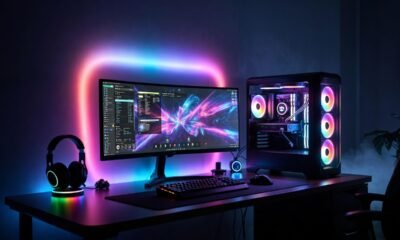
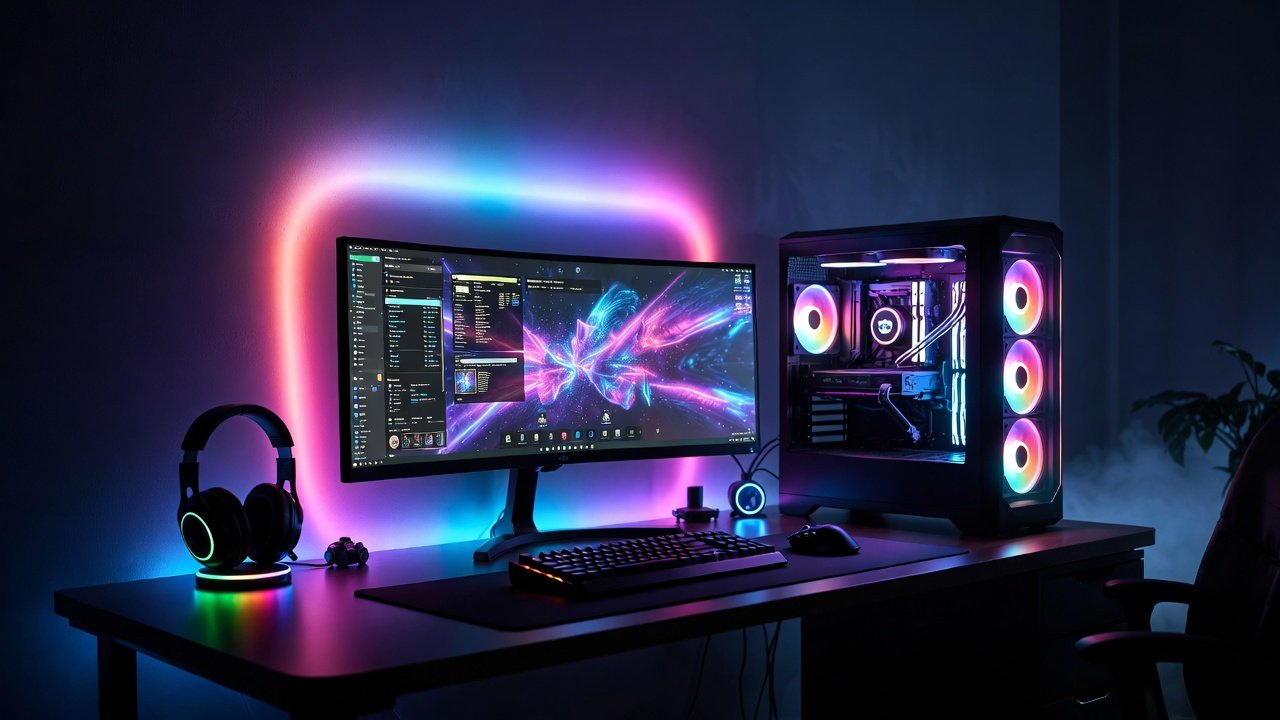
A minimal RGB gaming desk setup gives you the best of both worlds: clean, distraction‑free ergonomics with just enough lighting to feel immersive and modern. Instead of a cluttered, nightclub-style battlestation, you get a calm space that works for gaming, work, and content creation.
In 2026, this style fits perfectly with popular titles like GTA 6, Valorant, Call of Duty, and Fortnite, where focus and visibility really matter. At the same time, RGB strips, soft backlighting, and synced peripherals still create that satisfying gaming vibe without looking messy.
In this guide, you’ll learn how to build a minimal RGB gaming desk setup, even in a small room or on a budget, with practical layouts, lighting ideas, and real‑world examples.

What Defines a Minimalist RGB Gaming Desk Setup?
A minimalist setup isn’t just an empty desk; it is a curated space where every item serves a purpose. When you add RGB into the mix, the goal is to use light as an architectural element rather than a chaotic distraction.
In 2026, the best minimal RGB gaming desk setup ideas focus on “hidden” lighting. Instead of visible LED strips that sting the eyes, we look for diffused glows that emanate from behind monitors or under the desk surface. This creates a floating effect that feels modern and premium.
The Core Pillars of Minimalism in Gaming
- Decluttered Surface: Only the essentials (mouse, keyboard, monitor) stay on top.
- Intentional Color Palettes: Sticking to one or two primary colors rather than a “rainbow vomit” effect.
- Cable Management: Hidden wires are the hallmark of a professional-grade setup.
- Quality Over Quantity: Investing in a few high-quality peripherals instead of dozens of cheap accessories.
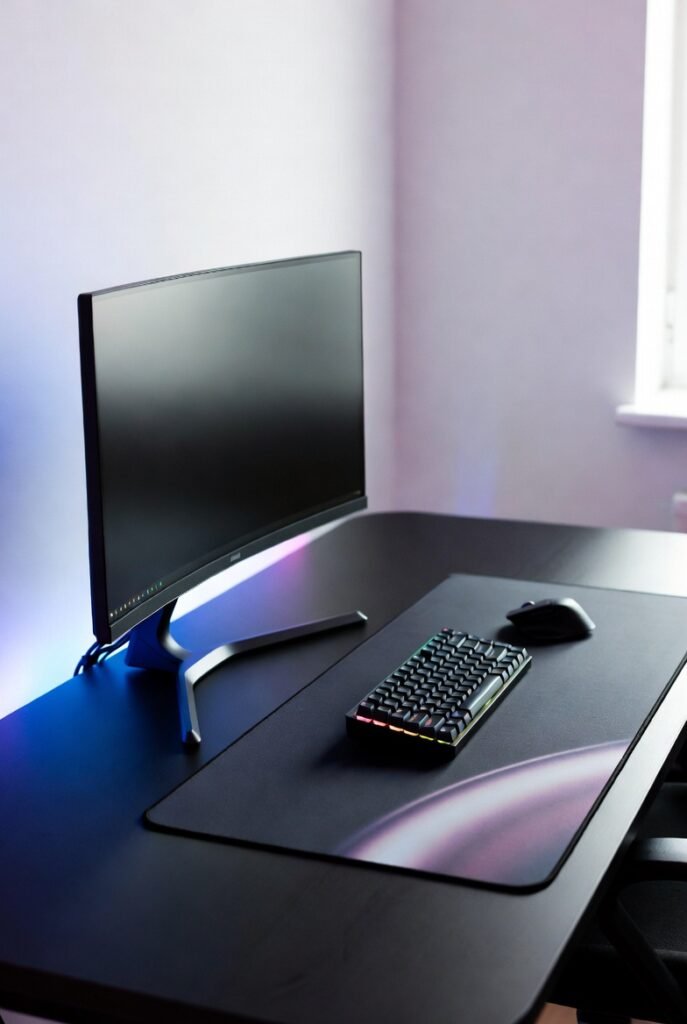
15 Best Minimal RGB Gaming Desk Setup Ideas
1. The “Under-Glow” Floating Desk
Mount your desk to the wall (floating style) and run a high-density RGB strip along the back edge. By reflecting the light off the wall, you create a deep ambient glow that makes the desk appear to hover.
2. The Monochrome Cyberpunk Theme
Stick to a strictly black-and-white hardware theme. Use a single RGB accent color—like neon violet or ice blue—to provide a futuristic contrast. This is a staple for modern minimalist rgb gaming desks.
3. The Natural Wood and Warm RGB Blend
Contrast a walnut or oak butcher block desk with warm white or amber RGB lighting. This “Japandi” gaming style is incredibly popular in 2026 for those who use their gaming space for productive work during the day.
4. The Ultrawide Single-Monitor Setup
Nothing says minimalism like a single 34-inch or 49-inch ultrawide monitor. Use a monitor arm to clear desk space and attach an RGB light bar to the back of the screen for an immersive bias-lighting effect.
5. The “Hidden PC” Approach
Small Form Factor (SFF) cases are a gamer’s best friend. Mount your PC under the desk or hide it behind a monitor. Use internal RGB components to cast a subtle glow through the ventilation holes rather than having a massive glowing tower on the desk.
6. The 60% Keyboard and Wireless Mouse Combo
Eliminating wires is the fastest way to achieve a clean rgb gaming desk setup. A wireless 60% mechanical keyboard with subtle per-key RGB looks incredibly sharp against a large, dark desk mat.
7. Symmetry-Based Design
Place your speakers, PC, and lighting elements in a perfectly symmetrical layout. Use dual RGB towers on either side of the monitor to frame your field of vision.
8. The Vertical Secondary Monitor
For streamers or Discord users, a vertical secondary monitor saves horizontal space. Add a slim RGB strip to the outer edge of the vertical screen to balance the lighting across your peripheral vision.
9. Nano-Leaf Wall Integration
Instead of lighting the desk, use the wall. Minimalist geometric light panels (like Nanoleaf or Govee) can be arranged in a simple line or triangle to provide the room’s primary light source.
10. The Pegboard Organizer with Integrated LEDs
Use an IKEA Skådis pegboard to hold your controllers and headphones. Thread an RGB strip around the frame of the pegboard to turn your storage into a piece of glowing wall art.
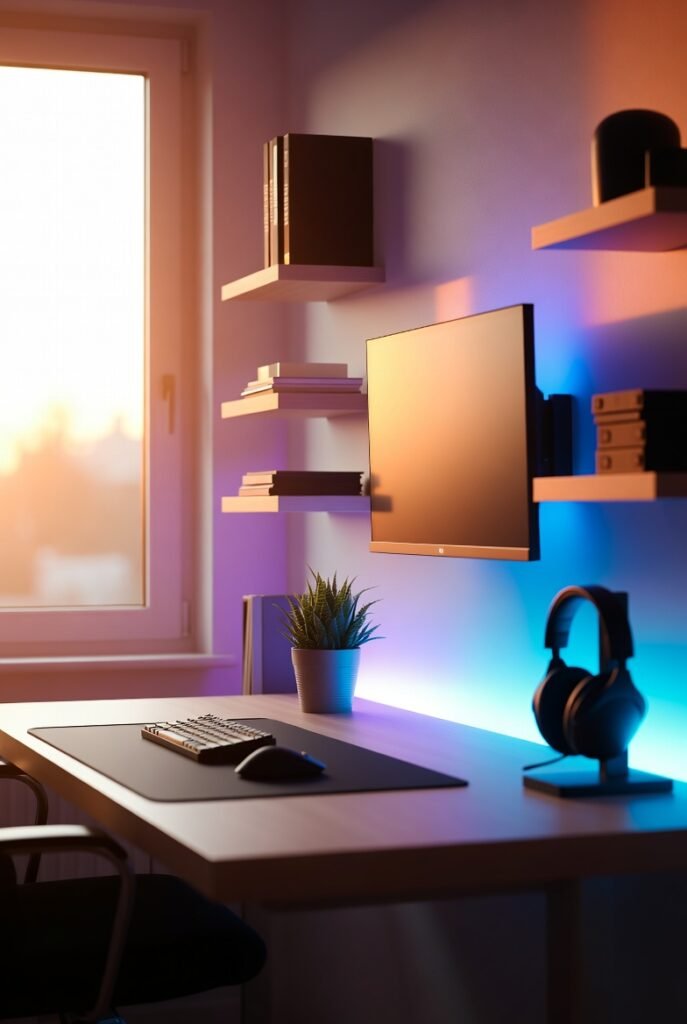
11. Minimalist RGB Gaming Setup for Small Rooms
If you’re tight on space, use a 40-inch desk and a monitor light bar. Light bars sit on top of your monitor and illuminate your desk surface without taking up any footprint, providing a clean, functional glow.
12. The “Dark Mode” Aesthetic
Use a matte black desk, black 3D wall panels, and deep red or forest green RGB. This creates a moody, “stealth” environment that is perfect for late-night gaming sessions in Call of Duty or GTA 6.
13. Smart Home Integration
Sync your desk RGB with your smart home system. Set a “Gaming Mode” that dims the room lights, closes the smart blinds, and activates your desk’s RGB setup with a single voice command.
14. The Glass Top Reflection
A glass-top desk can reflect the RGB from your keyboard and mouse, doubling the light intensity without adding more strips. Note: This requires impeccable cable management as everything is visible.
15. The Hidden LED Channel
Use aluminum LED channels with frosted diffusers. Instead of sticking strips directly to the desk, these channels create a professional, smooth line of light that looks like it’s built into the furniture.
Essential Hardware for a Minimalist RGB Setup
To pull off these ideas, you need the right components. Below is a comparison of the key elements required for a budget minimal rgb gaming desk setup versus a premium one.
Setup Comparison Table
| Feature | Budget Minimalist Setup | Premium Minimalist Setup |
| Desk | IKEA Linnmon / Lagkapten | Fully Jarvis / Secretlab Magnus Pro |
| Lighting | Standard 5V RGB Strips | Philips Hue / Govee AI Sync |
| Keyboard | Wired 60% RGB Keyboard | Wireless Custom Mechanical (Aluminum) |
| Mouse | Wired Lightweight Mouse | Logitech G Pro X Superlight 2 |
| Cable Mgmt | Velcro Straps & J-Hooks | Integrated Magnetic Trays |
| Monitor Mount | Basic Gas Spring Arm | Premium Dual-Screen Hidden Mount |
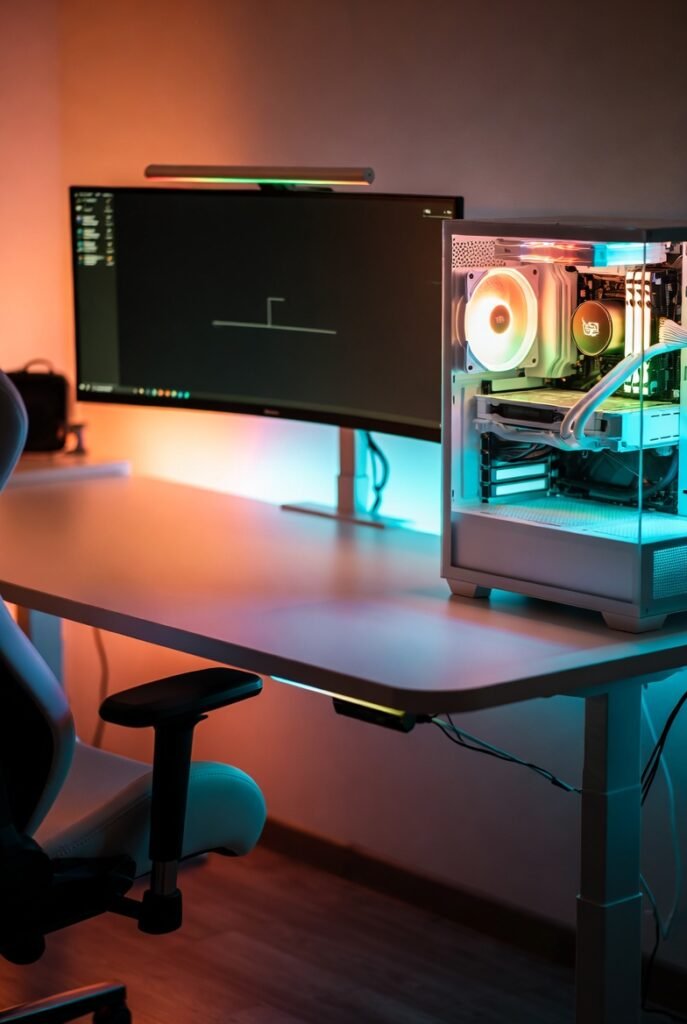
Advantages and Disadvantages of Minimalist RGB Setups
Advantages
- Reduced Distractions: A clean desk helps you stay “in the zone” during competitive play.
- Easier Maintenance: Fewer items on the desk mean dusting and cleaning take minutes, not hours.
- Professional Versatility: A minimal setup easily transitions from a gaming station to a professional home office for Zoom calls.
- Better Airflow: Less clutter around your PC allows for better heat dissipation.
Disadvantages
- Cable Management Difficulty: Minimalist setups provide nowhere to hide wires, requiring significant time to route them perfectly.
- Higher Initial Cost: High-quality wireless peripherals and clean-looking furniture often cost more than standard gear.
- Rigidity: Once a setup is “perfected,” adding new gear can disrupt the aesthetic balance.
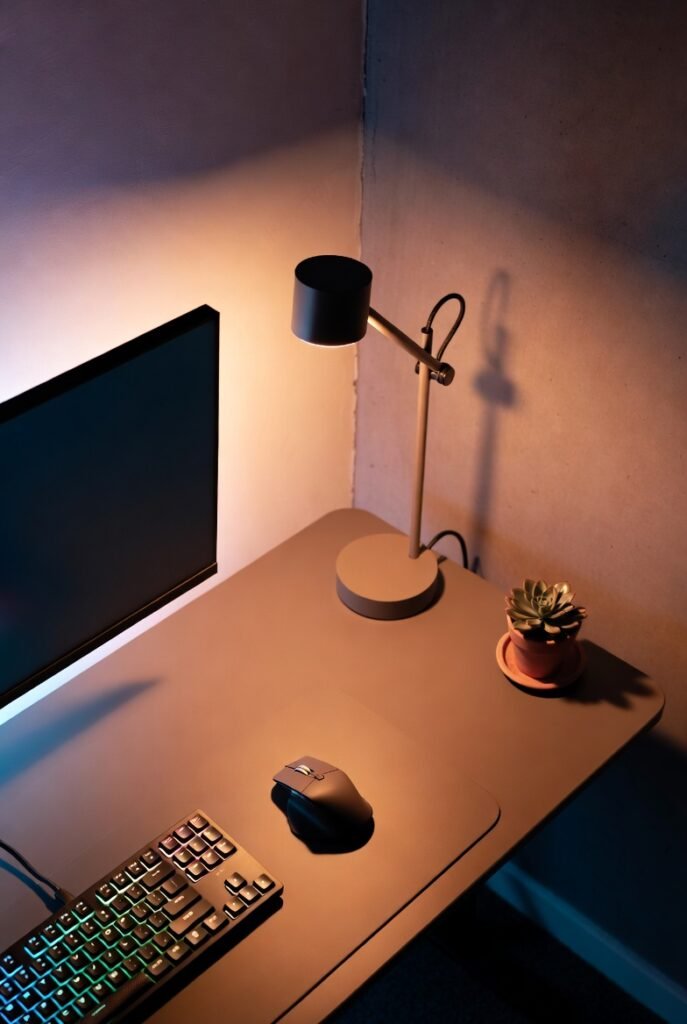
Common Mistakes and Myths
Myth: Minimalism Means No RGB
Reality: Minimalism is about restraint, not absence. You can have 10 different RGB sources as long as they are hidden or diffused and follow a consistent color theme.
Mistake: Neglecting the “Backside”
Many people focus on the front of the desk but leave a “spaghetti monster” of cables underneath. In a minimal setup, if the cables are visible under the desk, the entire aesthetic is ruined. Use a cable management tray or “sleeves” to group wires together.
Mistake: Mixing Too Many Software Eco-systems
Having Razer mouse software, Corsair keyboard software, and Govee light software can bloat your PC’s performance. In 2026, try to use a single “Open RGB” software or stick to one brand to ensure all lights sync perfectly.
Expert Tips for the Ultimate Clean Look
- Drill Through the Desk: If you have a dedicated desk, drill a small hole directly under your keyboard to route the cable. Cover it with your desk mat.
- Use a Desk Mat: A large, high-quality desk mat ties the entire setup together. It acts as an anchor for your mouse and keyboard.
- Color Temperature Matters: For a truly aesthetic rgb gaming desk setup, use a “Warm White” (3000K) for your room lighting and a contrasting “Cool Color” for your RGB. This creates depth in photos and videos.
- Monitor Arms are Mandatory: Replacing the bulky plastic stand that comes with your monitor with a sleek metal arm is the single biggest “minimalist” upgrade you can make.
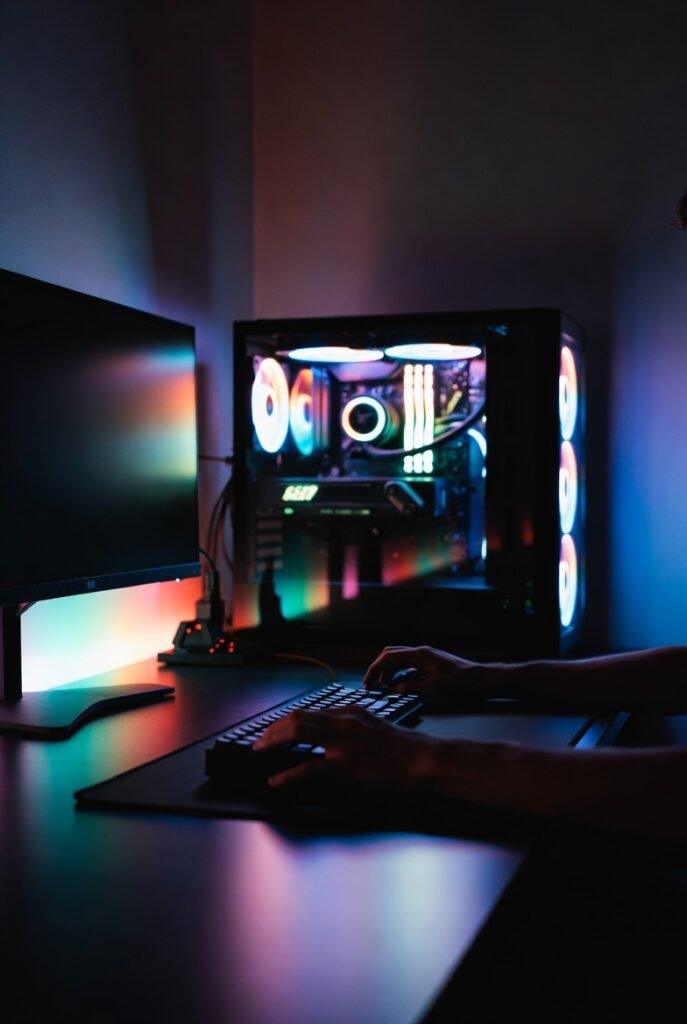
Conclusion: Less Stuff, More Play
Creating the best minimal RGB gaming desk setup is a journey of refinement. By focusing on diffused lighting, wireless peripherals, and strict cable management, you can build a sanctuary that looks as good as it performs. Remember, the goal is to enhance your gaming experience, not to create a space that feels too clinical to actually use. Start with the basics—a clean desk and one light source—and build your dream setup one intentional piece at a time.
Actionable Takeaway: Start your minimalist journey today by removing three items from your desk that you haven’t used in the last week. Then, invest in a single 5-meter RGB strip for bias lighting behind your monitor.


2026 Updated
best gaming laptop for GTA 6
Xbox Cloud Gaming vs PS Cloud
Valorant 2026 pro settings guide
top VR headset 2026 review
GTA 6 how to unlock features
competitive FPS settings US gamers
Frequently Asked Questions (FAQ)
1. How do I hide cables in a minimal gaming setup?
Use a combination of under-desk cable trays, J-channels, and Velcro ties. For cables running up to the monitor, use braided cable sleeves to group them into a single “trunk.”
2. What is the best desk for a minimalist gaming setup?
The IKEA Karlby butcher block paired with Alex drawers remains a classic, but the Secretlab Magnus Pro is currently the gold standard for minimalist setups due to its integrated power supply and magnetic cable management.
3. Can I have a minimal setup with a large gaming PC?
Yes. The trick is to place the PC on a separate side-table or on the floor (on a stand) to keep the main desk surface clear. Alternatively, use a case with a clean, tempered glass side panel to make the PC look like a piece of art.
4. What RGB colors are best for focus?
Deep blues and greens are known to be less distracting and more calming. Avoid flashing or “breathing” patterns during competitive gaming, as the movement can catch your eye and ruin your focus.
5. Are wireless gaming mice as fast as wired ones in 2026?
Absolutely. Modern wireless technology (like Logitech’s Lightspeed or Razer’s Hyperspeed) has reached a point where latency is identical to, or even lower than, many wired mice.
6. How much does a minimal RGB setup cost?
A basic setup can be achieved for $200–$300 (excluding the PC) by using budget-friendly IKEA furniture and DIY cable management. High-end setups can easily exceed $2,000 for premium motorized desks and synced lighting ecosystems.
🔥 2026 Trending Games
GTA 6 🔥🔥🔥
- Call of Duty 2026
- Fortnite Chapter updates
- Valorant new agents
- EA Sports FC updates
- Minecraft AI mods
- Roblox creator economy
Cloud Gaming
- Xbox Cloud Gaming
- NVIDIA GeForce NOW
- PlayStation Cloud
- “No Console Gaming” trend
Gaming Hardware & Accessories
- Gaming laptops (RTX 4070/4080)
- Gaming monitors (240Hz / OLED)
- Mechanical keyboards
- VR headsets
Game Development / AI in Gaming
- AI NPCs
- Unreal Engine 5
- Game mods using AI
- “How AI is changing gaming”
- Esports & Competitive Gaming
- Valorant / CS2 / Fortnite esports
- Tournament prize pools
- Pro player setup
- iOS games updates
- Gacha games
- Strategy games
Gaming Subscriptions & Services
- Xbox Game Pass
- PlayStation Plus
- Ubisoft+
Gaming Security
- Account hacking
- Anti-cheat systems
- Game ban appeals
Leave a Reply Cancel reply
Related Post:
https://lyallpurgamezone.site/what-are-the-best-240hz-gaming-monitors-for-2026
https://lyallpurgamezone.site/10-reasons-why-pc-is-better-than-console
https://lyallpurgamezone.site/what-are-the-best-strategies-to-lower-gaming-ping
https://lyallpurgamezone.site/guide-to-the-best-gaming-ssds-gen4-vs-gen5-tested
https://lyallpurgamezone.site/how-to-create-a-1000-gaming-pc-for-2026
https://lyallpurgamezone.site/ultimate-top-7-ps6-specs-leaks-you-need-to-know


Introduction:
Your crosshair is one of the most important settings in Valorant. A clean, well‑tuned crosshair helps you see enemies clearly, line up headshots quickly, and stay consistent in ranked matches.
In 2026, many pro players use specific crosshair codes that you can copy directly into your game. These codes give you access to tried‑and‑tested setups without hours of trial and error.
This guide breaks down the best Valorant crosshair codes for 2026, including pro settings, small dot headshot machines, and beginner‑friendly options. You’ll also learn how to import codes, avoid common mistakes, and adjust settings to match your playstyle.
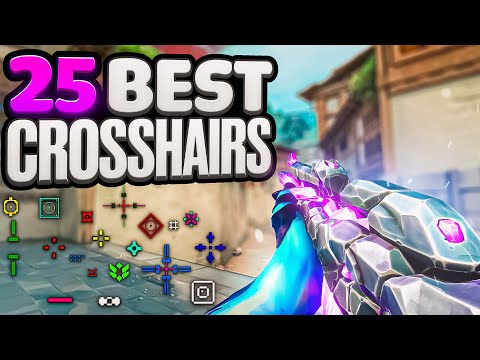
How Valorant Crosshair Codes Work
What Is a Valorant Crosshair Code?
Valorant lets you save and share crosshairs using a compact code string. When you paste this code into the crosshair settings, the game automatically recreates the exact shape, color, and style.
Each code controls settings like:
- Color (cyan, green, white, etc.)
- Inner and outer line length and thickness
- Center dot on or off
- Outlines and opacity for visibility on all maps
This system is also the backbone of every major Valorant crosshair database and crosshair generator site online.
How to Import a Crosshair Code in Valorant
To use any of the crosshair codes in this article, follow these steps:
- Open Valorant and go to Settings.
- Click the “Crosshair” tab.
- At the top, click the crosshair profile drop‑down and select “Import Profile Code”.
- Paste the code, then click “Import”.
- Select the new profile to start using it immediately.
You can save multiple crosshairs and quickly switch between them depending on your role or mood.

Top 5 Best Valorant Crosshair Codes You Need to Try (2026)
Below are five high‑impact, battle‑tested crosshair codes you should test in 2026. They cover TenZ’s famous setup, a small dot crosshair, a clean beginner crosshair, a pro box/cross, and a versatile all‑rounder.
Note: Codes may appear slightly different on some monitors, so always tweak color and thickness to your own visibility preference.
1. TenZ Valorant Crosshair Code (Pro Favorite in 2026)
TenZ’s crosshair is one of the most copied in Valorant because it strikes a strong balance between visibility and precision. It’s a small, tight cross that works extremely well for headshots and flicks.
- Style: Minimalistic small cross
- Great for: Duelists, aim‑heavy roles, aggressive entry fraggers
- Crosshair code (popular 2026 variant):
This code uses a bright color and limited gap to keep your focus exactly where bullets land, which is ideal if you’re confident with your aim and want a pro‑level feel.
2. Best Small Dot Crosshair for Headshots
Small dot crosshairs are extremely popular among high‑level players who want a precise reference point for tapping and bursting. A good small dot makes it very easy to see exactly where your first bullet will land.
- Style: Tiny center dot, no distracting lines
- Great for: Riflers focused on one‑taps, disciplined spray control
- Example dot crosshair codes:
- Square dot (white):
0;P;o;1;d;1;z;4;0b;0;1b;0 - Round dot (white):
0;s;1;P;h;0;d;1;z;3;f;0;0t;3;0l;1;0o;1;0a;1;0f;0;1t;0;1l;0;1o;0;1a;0;1f;0
- Square dot (white):
Community feedback suggests keeping the dot only as big as your bullet tracer and using a high‑contrast color (yellow or green) for the best visibility on all maps.
3. Beginner‑Friendly Clean Crosshair (Safe, Clear, and Forgiving)
If you’re new to Valorant or FPS games, you don’t need an ultra‑tiny or flashy crosshair. A simple, slightly larger cross with a clear center makes it much easier to track enemies and learn crosshair placement.
- Style: Medium‑sized cross, no center dot, clear gap
- Great for: Beginners and casual players, those still learning recoil and movement
- Example beginner‑type pro crosshair (inspired by popular pro setups):
0;P;h;0;0l;4;0o;0;0a;1;0f;0;1b;0(used by multiple pros as a simple, visible cross)
This kind of crosshair is forgiving and works well at most ranges. You can always shrink it over time as your aim improves.
4. Pro Box / Compact Crosshair (For Consistent Rifling)
Many pros use tight, boxed crosshairs with short lines and minimal outer extensions. These crosshairs are very stable and help you focus on the enemy’s head rather than on your UI.
- Style: Small, compact cross with short lines
- Great for: Consistent rifling, disciplined peeking, anchor roles
- Example pro‑style codes from current lineups:
These crosshairs shine when you hold angles or swing for precise duels. They stay visible but do not block vision around the target.
5. Flexible All‑Rounder Crosshair (Good for Every Role)
If you like swapping roles or agents—Duelist one game, Controller the next—you want a crosshair that works in almost every situation. A slightly brighter, medium‑small cross with a visible outline is a strong all‑round choice.
- Style: Medium‑small, clear edges, strong color contrast
- Great for: Flex roles, ranked grinders, those who play multiple agents
- Example pro‑inspired flexible crosshair:
This setup remains visible even in smoke edges, bright backgrounds, and chaotic fights while still offering enough precision for crisp headshots.
Comparison of the Top 5 Valorant Crosshair Codes
| Crosshair type | Main use case | Difficulty to use | Ideal players |
|---|
Why Your Valorant Crosshair Settings Matter
Before we dive into the specific codes, it is essential to understand why players constantly tweak their Valorant crosshair settings. Your crosshair provides the visual feedback necessary for “center-screening”—the ability to keep your eyes focused on where the enemy’s head will appear.
- Visual Clarity: Pro players often use “Cyan” or “Green” because these colors rarely appear in the game’s environment, making the reticle easier for the brain to track.
- Precision vs. Tracking: Smaller crosshairs (like the small dot crosshair Valorant code) are superior for long-range taps, while slightly larger “cross” styles help with spray control and tracking moving targets like Neon or Jett.
- E-E-A-T in Aiming: Reliability and consistency are key. By using a Valorant crosshair database of pro settings, you are adopting configurations that have been tested under the highest pressure imaginable.
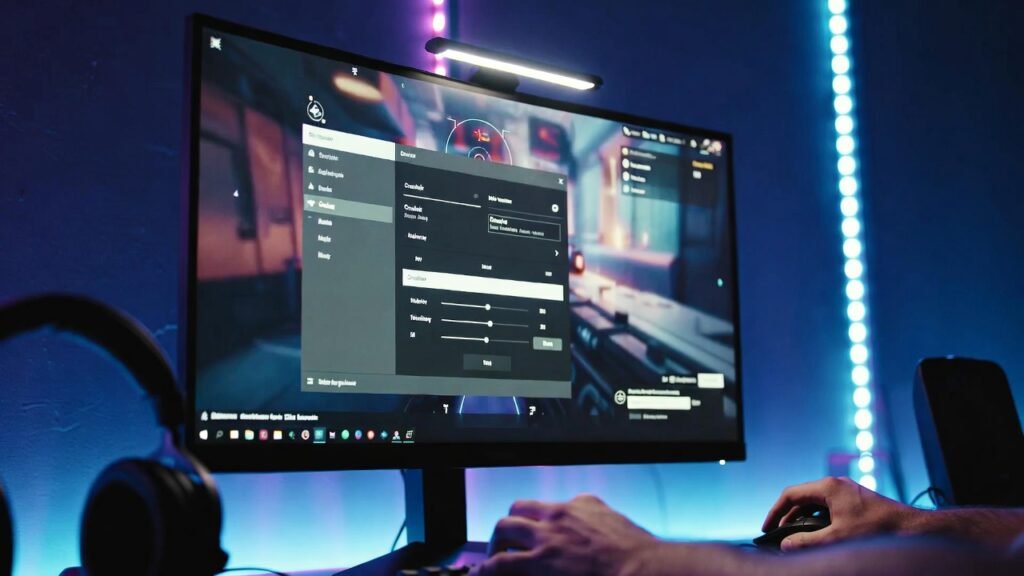
1. TenZ Valorant Crosshair Code (The Classic Cyan)
Even in 2026, the TenZ Valorant crosshair code remains the most sought-after configuration in the community. Known for his “human aimbot” mechanics, TenZ prefers a small, cyan-colored cross that offers a perfect balance between visibility and precision. It is small enough to hit long-range headshots on Haven’s C-long but visible enough to track during a chaotic frenzy.
- The Code:
0;s;1;P;c;5;h;0;m;1;0l;3;0o;0;0a;1;0f;0;1b;0;S;c;5;o;1 - Why it works: The lack of a center gap means you have a solid point of reference for every shot.
2. Aspas “The King of Tracking” Crosshair
As one of the world’s best duelists, Aspas uses a minimalist setup designed for aggressive entry-fragging. If you play high-mobility agents, this is the best Valorant crosshair for headshots while moving or counter-strafing. It uses a thin profile that doesn’t “bloom” or distract you during high-speed engagements.
- The Code:
0;s;1;P;o;1;d;1;0b;0;1b;0;S;c;0 - Why it works: High contrast and a tight center point allow for “snap” aiming, which is vital for flicking to corners.
3. The “Small Dot” Precision Crosshair
The small dot crosshair Valorant code has seen a massive resurgence in 2026. This style is preferred by “aim purists” who want zero obstruction. If you find that traditional lines distract you from seeing the enemy’s head, the dot is your best friend.
- The Code:
0;P;c;1;o;1;d;1;0b;0;1b;0(Green Dot) - Why it works: It forces you to be incredibly precise. If the dot is on the pixel, the shot lands. It is widely considered the best choice for Vandal users who prioritize first-bullet accuracy.
4. Demon1 “World Champion” Settings
Demon1’s rise to the top was fueled by his calm, robotic aim. His crosshair reflects this—it is simple, white, and small. It is often cited as the best Valorant crosshair for beginners who want to emulate pro habits without the visual clutter of more complex “circle” or “hollow” designs.
- The Code:
0;s;1;P;o;1;d;1;m;1;0b;0;1b;0 - Why it works: The white color with black outlines makes it visible on every map, from the snowy dunes of Icebox to the bright sun of Sunset.
5. ZmjjKK (KangKang) “The Operator” Crosshair
For those who primarily use the Operator or want a crosshair that feels “snappy” on snipers, the EDG superstar ZmjjKK offers a unique configuration. This crosshair is slightly more “open” than TenZ’s, providing a better view of the target area within the reticle.
- The Code:
0;P;h;0;d;1;f;0;0l;2;0v;2;0g;1;0o;1;0f;0;1b;0 - Why it works: It provides a great “frame” for the enemy model, making it easier to time your shots when an enemy peeks into your line of sight.
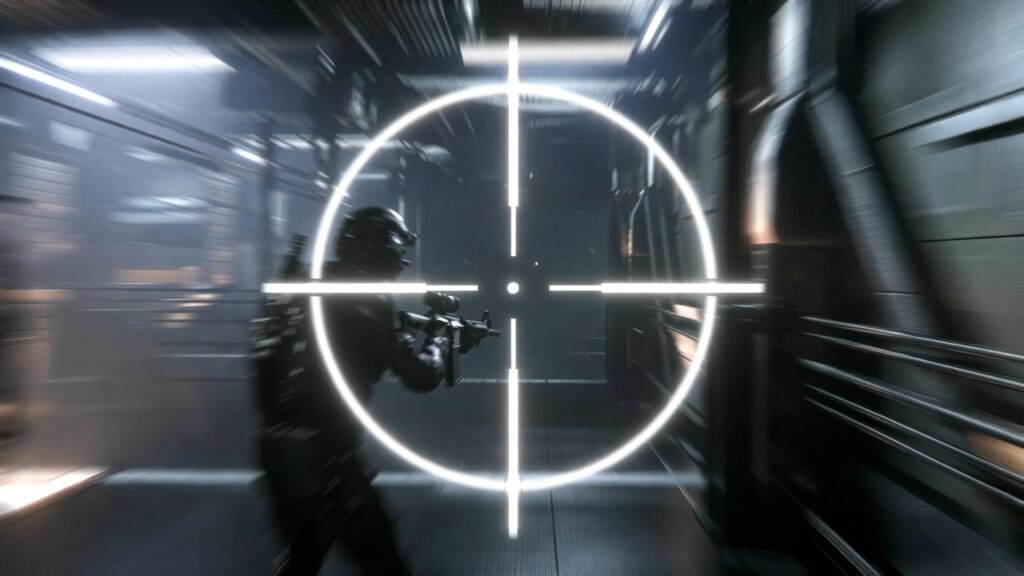
Comparison Table: Top 5 Valorant Crosshairs 2026
| Player/Style | Color | Type | Best For | Code Snippet |
| TenZ | Cyan | Small Cross | All-around / Rifling | 0;s;1;P;c;5;h;0;m;1... |
| Aspas | White | Tight Cross | Entry Fragging | 0;s;1;P;o;1;d;1;0b... |
| Small Dot | Green | Single Pixel | Long-range Taps | 0;P;c;1;o;1;d;1;0b... |
| Demon1 | White | Minimalist | Consistency | 0;s;1;P;o;1;d;1;m... |
| ZmjjKK | White | Open Cross | Sniping/OPing | 0;P;h;0;d;1;f;0;0l... |
Advantages and Disadvantages of Pro Crosshairs
Advantages
- Proven Results: These codes are used by players earning millions in prize money; they are mathematically optimized for the game’s FOV.
- Instant Import: No more fumbling with sliders. The Valorant crosshair generator system allows for 1-click updates.
- Reduced Visual Noise: Most pros disable “Movement Error” and “Firing Error” to keep their screen steady.
Disadvantages
- Subjectivity: A crosshair that works for a 24-inch 540Hz monitor might feel too small on a 27-inch 1440p screen.
- Color Blindness: Some “Pro” colors like Green or Red may not work for everyone.
- Placebo Effect: Changing your crosshair won’t fix bad crosshair placement Valorant habits or poor positioning.
Common Crosshair Myths and Mistakes
Myth 1: A smaller crosshair always means better aim.
Reality: While a tiny crosshair is great for long range, it can be very difficult to see during a chaotic site execute when flashes and smokes are everywhere. Sometimes, a slightly larger crosshair is better for “visual anchoring.”
Myth 2: You must use the same color as the pros.
Reality: Color is the most subjective part of pro Valorant settings. If you struggle to see Cyan on Pearl or Breeze, switch to Magenta or Yellow. High visibility is more important than following a pro exactly.
Mistake: Leaving “Movement Error” On
Most beginners leave movement error on to learn when they are accurate. However, the visual “blooming” of the crosshair can be incredibly distracting. Once you understand the basics of counter-strafing, turn it off for a cleaner view.
Expert Tips for Finding Your Perfect Crosshair
- Use a Valorant Crosshair Database: Don’t just stick to one. Spend 10 minutes in the Range trying five different codes to see which one feels “natural.”
- Test in Deathmatch: Never take a brand-new crosshair into a Competitive match. Test how it feels against moving targets in a low-stakes environment.
- Adjust for Resolution: If you play on “Stretched Res” (e.g., 1280×960), your crosshair will appear wider. You may need to decrease the thickness to compensate.
- Contrast is Key: If you find yourself losing the center of your screen during fights, try adding “Outlines” to your crosshair. It adds a 1-pixel black border that makes any color pop.
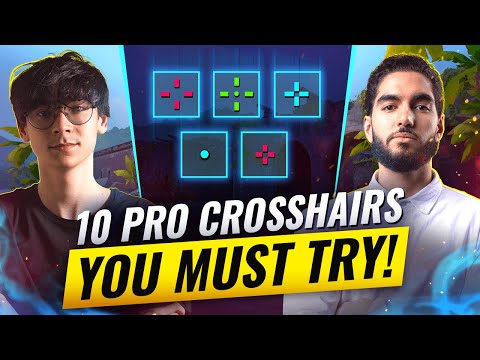
Conclusion
Finding the best Valorant crosshair codes is a journey of trial and error, but starting with pro-level settings gives you a massive head start. In 2026, the trend is clearly leaning toward small, static, and high-contrast designs that prioritize headshot accuracy over all else.
Whether you choose the surgical precision of the TenZ Valorant crosshair code or the minimalist efficiency of a dot crosshair, the most important thing is consistency. Once you find a code that feels right, stick with it—building muscle memory is the true secret to ranking up.
Ready to try them out? Copy your favorite code from the list above, head into your Valorant settings, and hit “Import.”
2026 Updated
Xbox Cloud Gaming vs PS Cloud
Valorant 2026 pro settings guide
top VR headset 2026 review
GTA 6 how to unlock features
competitive FPS settings US gamers
FAQ:
1. How do I import a crosshair code in Valorant?
To import a code, go to Settings > Crosshair > Primary. Look for the “Import Profile” icon (a small downward arrow) next to the Crosshair Profile dropdown. Paste the code and click “Import.”
2. What is the best crosshair color for Valorant?
Statistically, Cyan, Green, and Magenta are the best because they have the highest contrast against Valorant’s map textures and character outlines.
3. Does changing my crosshair actually improve my aim?
A better crosshair won’t improve your raw reaction time, but it can improve your visual clarity and confidence, leading to more consistent headshots.
4. Why do pros use such small crosshairs?
Pros have exceptional mouse control. A small crosshair allows them to see more of the enemy’s head, which is crucial for pixel-perfect accuracy at long distances.
5. What is the “Circle” crosshair code?
The hollow circle (often used for training) can be made with: 0;P;c;1;h;0;d;1;z;3;f;0;0t;3;0l;2;0o;2;0a;1;0f;0;1b;0.
6. Can I have different crosshairs for different agents?
Yes! In 2026, Valorant allows you to save multiple profiles. Many players use a different crosshair for “Lineup” agents like Sova or Viper compared to entry duelists like Jett.
🔥 2026 Trending Games
GTA 6 🔥🔥🔥
- Call of Duty 2026
- Fortnite Chapter updates
- Valorant new agents
- EA Sports FC updates
- Minecraft AI mods
- Roblox creator economy
Cloud Gaming
- Xbox Cloud Gaming
- NVIDIA GeForce NOW
- PlayStation Cloud
- “No Console Gaming” trend
Gaming Hardware & Accessories
- Gaming laptops (RTX 4070/4080)
- Gaming monitors (240Hz / OLED)
- Mechanical keyboards
- VR headsets
Game Development / AI in Gaming
- AI NPCs
- Unreal Engine 5
- Game mods using AI
- “How AI is changing gaming”
- Esports & Competitive Gaming
- Valorant / CS2 / Fortnite esports
- Tournament prize pools
- Pro player setup
- iOS games updates
- Gacha games
- Strategy games
Gaming Subscriptions & Services
- Xbox Game Pass
- PlayStation Plus
- Ubisoft+
Gaming Security
- Account hacking
- Anti-cheat systems
- Game ban appeals
Leave a Reply Cancel reply
Related Post:
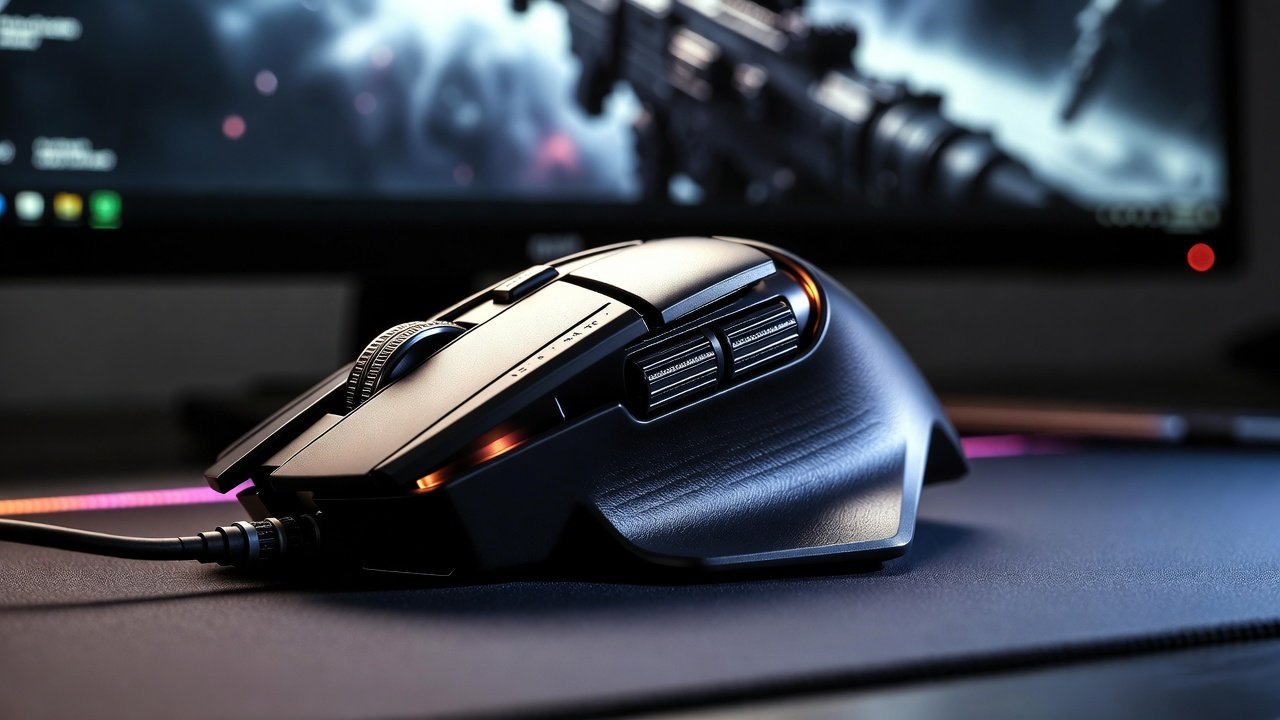
Introduction:
In fast-paced shooters like Valorant, CS2, Call of Duty 2026, and Fortnite, your mouse is the most important piece of esports gaming gear after your monitor.
A good FPS gaming mouse can reduce latency, improve tracking, and give you the consistency you need to hit precise headshots.
However, the “best gaming mouse for FPS” is not the most expensive one; it is the one that fits your hand, grip style, and preferred sensitivity.
This 2026 FPS mouse buying guide will walk you through DPI, weight, sensor, polling rate, wired vs wireless, and the exact settings many pro players use so you can make a confident choice.

Core Features of a Great FPS Gaming Mouse
Sensor: The Heart of an FPS Mouse
For competitive FPS games, you should always choose a mouse with a high-end optical sensor.
Modern flagship sensors from brands like Razer and Logitech track extremely accurately at high speeds and low sensitivities, which is critical for flick shots and micro-corrections.
Key things to look for in a sensor:
- True tracking at low and high speeds (no acceleration)
- High maximum DPI (usually up to 20,000–35,000, even if you never use it)
- Stable tracking on common mousepads (cloth and hybrid surfaces)
For example, Razer’s Focus Pro 35K sensor offers up to 35,000 DPI and excellent tracking, making it highly suitable for Valorant and CS2.
DPI Explained: What Pros Actually Use
DPI (dots per inch) controls how far your cursor moves on-screen for a given physical movement of the mouse.
Higher DPI means faster cursor movement, while lower DPI provides more granular control, which is why many pro FPS players use relatively low DPI settings.
Typical pro ranges:
- Most CS2 pros: 400 or 800 DPI
- Recommended CS2 range: 400–800 DPI with in-game sensitivity around 1.5–2.5
- Many Valorant pros also stay in the 400–800 DPI range and adjust in-game sensitivity for comfort.
A useful concept is eDPI (effective DPI):
eDPI=DPI×in‑game sensitivityeDPI=DPI×in‑game sensitivity
Example: 800 DPI × 1.5 sensitivity = 1200 eDPI.
Practical recommendation for a new FPS mouse in 2026:
- Start with 800 DPI and moderate in-game sensitivity (1.0–2.0 for CS2 / Valorant)
- Turn off mouse acceleration in both Windows and in-game for consistent aim.
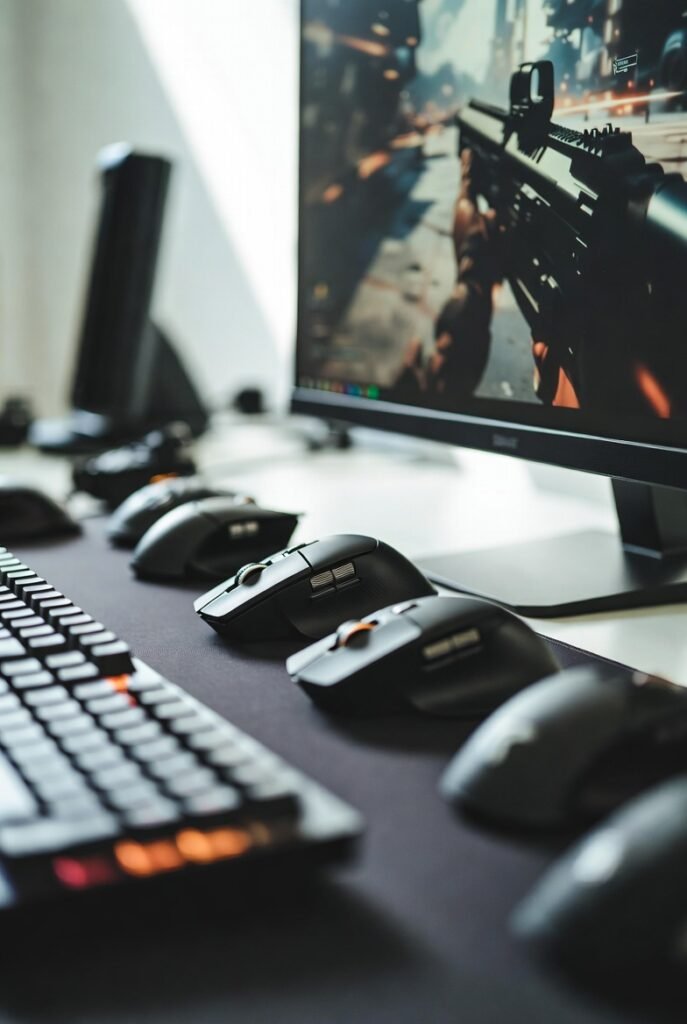
Polling Rate: 1000 Hz vs 8000 Hz
Polling rate is how often your mouse reports its position to your PC, measured in Hz.
A 1000 Hz mouse updates every 1 ms, while an 8000 Hz mouse updates every 0.125 ms, which can reduce input delay.
Recent lab tests show:
- 1000 Hz is still sufficient for casual and many competitive players.
- 8000 Hz (8K) polling can reduce motion latency by around 1.4 ms and smooth out micro-stutters, which matters to high-level players.
If you play ranked Valorant, CS2, or CoD 2026 seriously, a gaming mouse with a high polling rate (1000 Hz minimum, 8000 Hz ideal) is a strong choice—assuming your PC can handle the additional CPU load.
Weight: Lightweight vs Heavy for FPS
Weight has become one of the most important factors for FPS gaming mice.
Ultralight mice reduce fatigue and make fast flicks and large swipes easier, especially in tactical shooters.
Current 2026 trends:
- Ultralight champion example: Razer Viper V3 Pro at around 54 g.
- Popular high-end esports mice often sit between 54–65 g.
- Heavier, MMO-style mice (90 g+) are better suited for games that need many buttons, not pure FPS precision.
If your main goal is performance in Valorant or CS2, aim for an ultra-light or lightweight gaming mouse under about 70 g if possible.

Understanding the Core Specs of an FPS Mouse
When you’re searching for the best FPS gaming mouse, you’ll be hit with a wall of technical jargon. Let’s strip away the marketing fluff and focus on the three pillars that actually impact your headshot percentage: weight, sensor precision, and latency.
The Weight Revolution: Is Lighter Always Better?
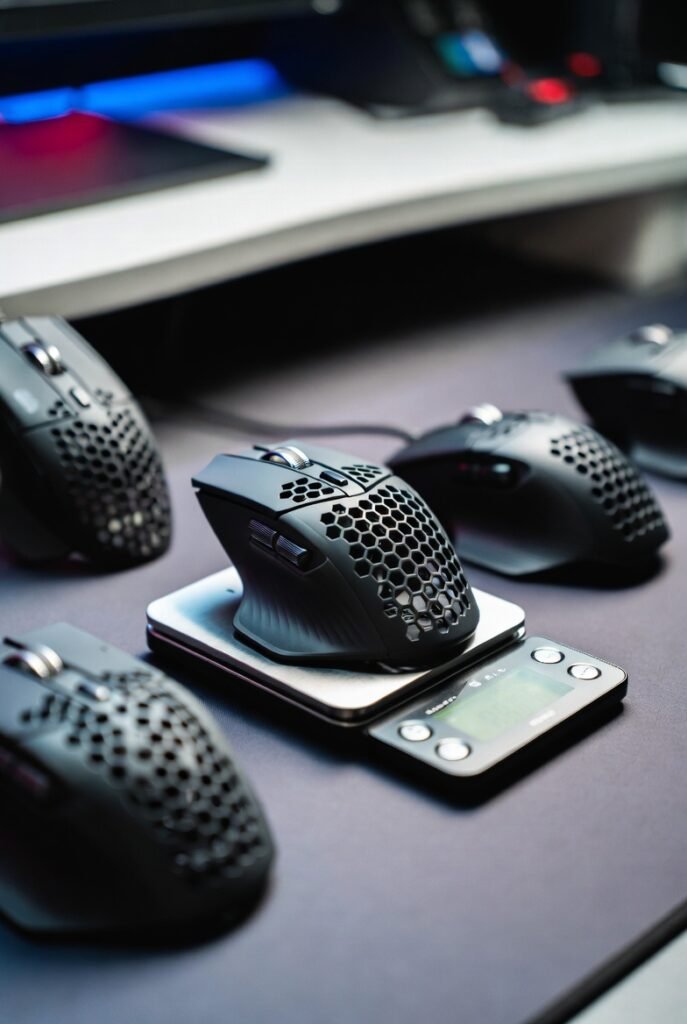
In 2026, the industry standard for a lightweight gaming mouse for FPS has plummeted. While 80g was considered “light” a few years ago, today’s top-tier esports mice, such as the Razer Viper V3 Pro and the ASUS ROG Harpe II Ace, weigh in between 48g and 54g.
- Why it matters: Lower mass means less inertia. You can start a flick faster and, more importantly, stop it more precisely on a target’s head.
- The “Goldilocks” Zone: Most competitive players prefer mice between 45g and 60g. Anything heavier can cause fatigue during long sessions; anything lighter can sometimes feel “flighty” or hard to control for high-sensitivity players.
Sensors and DPI: Beyond the Numbers
You might see mice boasting 44,000 DPI, but here is a secret: most pros still play at 400 or 800 DPI. What truly matters is the sensor’s tracking consistency and its ability to handle high speeds (IPS) and acceleration without “spinning out.”
Modern sensors like the Focus Pro 45K or the Logitech HERO 2 offer nearly 1:1 raw input. This means the cursor moves exactly where your hand moves, with zero artificial smoothing or prediction. For games like Valorant, look for a high-precision optical sensor that supports Motion Sync, which aligns the sensor’s reports with your PC’s polling intervals for a smoother feel.
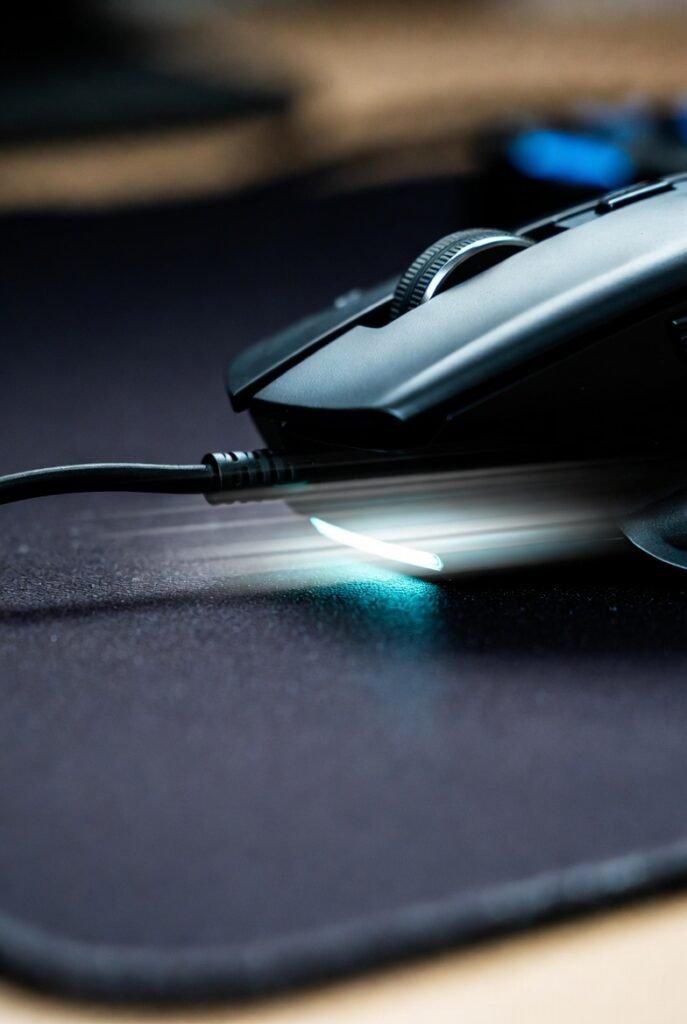
Polling Rate: The Move to 8000Hz
A standard gaming mouse has a polling rate of 1000Hz (reporting its position 1,000 times per second). In 2026, 8K polling (8000Hz) has become the benchmark for competitive FPS gaming gear.
- 1000Hz: 1ms delay.
- 8000Hz: 0.125ms delay.
While the difference is subtle, it results in much smoother cursor movement, especially if you are using a high-refresh-rate monitor (360Hz or 540Hz). However, keep in mind that 8K polling can be taxing on your CPU and will drain a wireless mouse’s battery much faster.
Grip Styles: Matching Shape to Your Hand
The best specs in the world won’t save you if the mouse is uncomfortable. Your “grip style” determines which mouse shape will feel natural.
1. Palm Grip
The entire hand rests on the mouse. This is common for players who use large, ergonomic mice like the Razer DeathAdder V4 Pro or the ZOWIE EC series.
- Best for: Stability and long-term comfort.
- Recommended Shape: Ergonomic (asymmetrical).
2. Claw Grip
Only the fingertips and the bottom of the palm touch the mouse. This is the most popular grip for competitive FPS players because it allows for fast clicking and precise micro-adjustments.
- Best for: Aggressive flicking and fast trigger response.
- Recommended Shape: Symmetrical with a pronounced hump in the back (e.g., Logitech G Pro X Superlight 2).
3. Fingertip Grip
Only the fingertips touch the mouse; the palm remains completely off. This provides the most range of motion but requires the most finger strength.
- Best for: Vertical tracking and extreme agility.
- Recommended Shape: Small, short, and ultra-lightweight symmetrical mice.
Comparison of Top FPS Mice in 2026
| Model | Weight | Max Polling Rate | Sensor | Best For |
| Logitech G Pro X Superlight 2 | 60g | 8000Hz | HERO 2 (44K) | Reliability & Shape |
| Razer Viper V3 Pro | 54g | 8000Hz | Focus Pro 35K | Pure Performance |
| ASUS ROG Harpe II Ace | 48g | 8000Hz | AimPoint Pro | Ultra-Lightweight |
| Vaxee XE v2 Wireless | 63g | 4000Hz | PAW 3395 | Build Quality & Clicks |
| 8BitDo Retro R8 | 72g | 4000Hz | PAW 3395 | Budget/Retro Aesthetic |
Wired vs. Wireless: Is the Cable Dead?
Five years ago, professional gamers were wary of wireless lag. Today, that debate is over. Best wireless gaming mice for FPS now feature latency that is actually lower than many wired competitors.
- Wireless Pros: Complete freedom of movement. No “cable drag” that can mess up your aim.
- Wireless Cons: Higher price point and the need to charge (though most now last 80+ hours on a single charge).
- Wired Pros: Cheaper and lighter (no battery). The Endgame Gear OP1 8K is a fan favorite for those who want 8K polling without worrying about battery life.
Common Mistakes When Buying a Gaming Mouse
- Chasing High DPI: Don’t buy a mouse just because it has “50,000 DPI.” You will likely never use more than 1600. Focus on the sensor’s signal purity instead.
- Ignoring Hand Size: If you have small hands, a “Top Rated” large ergonomic mouse will feel like a brick. Always check dimensions (Length x Width x Height).
- Overlooking Mouse Feet: The glide is as important as the sensor. Look for 100% Virgin Grade PTFE feet or aftermarket glass skates for the smoothest experience.
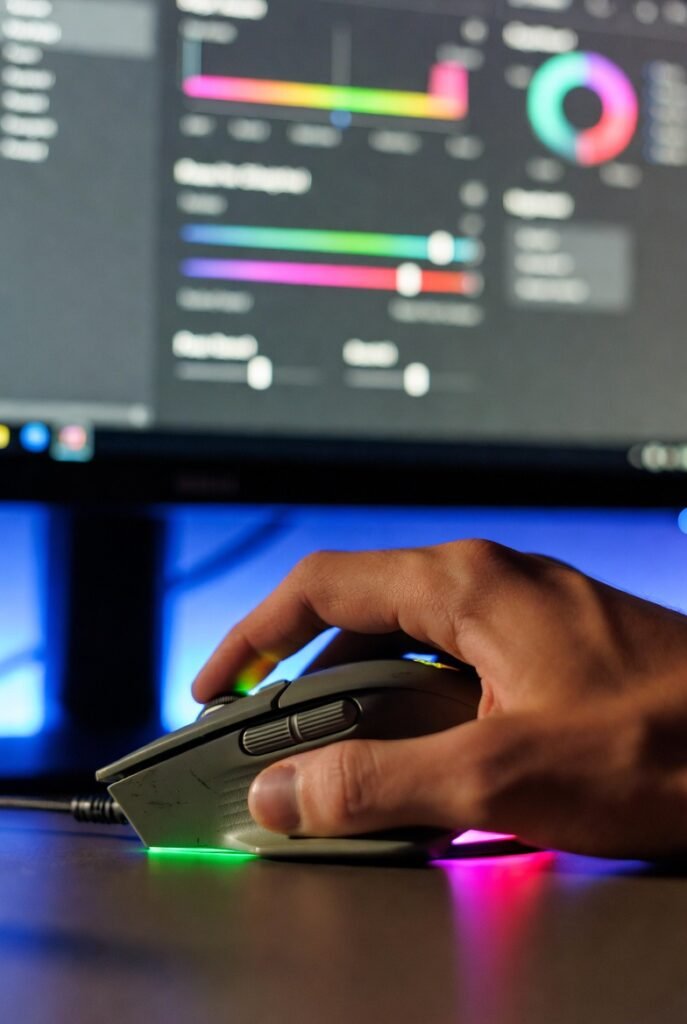
- Buying for Features over Shape: RGB lighting and 12 side buttons are useless in a fast-paced shooter. In an FPS, less is more.
- Read More:
Best Practices for Peak Performance
To get the most out of your new esports gaming gear, follow these expert tips:
- Turn Off Mouse Acceleration: In Windows, ensure “Enhance Pointer Precision” is unchecked. You want your movements to be linear.
- Match Your Polling Rate to Your Monitor: If you have a 144Hz monitor, 8000Hz is overkill. If you have a 540Hz monitor, 4K or 8K polling is highly recommended.
- Use a Consistent Surface: A top-tier mouse on a cheap, dirty desk pad is a waste. Invest in a dedicated gaming mousepad (cloth or glass) and keep it clean.
- Warm Up Your Grip: Before jumping into a ranked match in Valorant or CS2, spend 10 minutes in an aim trainer to get your hand used to the mouse’s weight and glide.
- Read More:
Conclusion: Finding Your Perfect Aim
There is no single “best” mouse that fits every human hand. However, for competitive FPS gaming in 2026, the formula is clear: prioritize a comfortable shape, aim for a weight under 65g, and ensure the sensor has Motion Sync and high polling capabilities.
If you want a safe bet that works for almost everyone, the Logitech G Pro X Superlight 2 remains the king of consistency. If you want the absolute cutting edge of speed, the Razer Viper V3 Pro or the ASUS ROG Harpe II Ace are your best bets.
Actionable Takeaway: Determine your grip style first, then filter your choices by weight and shape. Once you buy, stick with that mouse for at least two weeks to allow your muscle memory to adapt before making a final judgment.
2026 Updated
best gaming laptop for GTA 6
Xbox Cloud Gaming vs PS Cloud
Valorant 2026 pro settings guide
top VR headset 2026 review
GTA 6 how to unlock features
competitive FPS settings US gamers
FAQ: Most Searched Questions About FPS Mice
1. What mouse do pro FPS players use most?
Currently, the Logitech G Pro X Superlight 2 and the Razer Viper V3 Pro are the most used mice in the pro scenes for Valorant and CS2. Pro players value the “safe” shapes and the proven reliability of these brands.
2. Is 8000Hz polling rate worth it?
It depends on your monitor. If you are using a monitor with a refresh rate of 360Hz or higher, 8000Hz provides a noticeably smoother and more responsive cursor. For 144Hz or 240Hz, the difference is negligible.
3. What is the best DPI for Valorant and CS2?
Most professional players use either 400 or 800 DPI. This allows for more precise arm movements. High DPI (above 1600) can sometimes lead to “pixel skipping” or jittery aim if the sensor is not perfectly calibrated.
4. Are lightweight mice better for sniping?
Yes and no. Lightweight mice are better for flick-sniping (quick reactions). However, some snipers prefer a slightly heavier mouse (70g range) for the added stability it provides when holding a steady angle.
5. Should I get a mouse with holes in it?
The “honeycomb” design was popular to save weight, but in 2026, manufacturers like Razer and Logitech have achieved sub-60g weights with solid shells. Solid shells are generally more durable and easier to keep clean.
6. Can I use a wireless mouse for competitive gaming?
Absolutely. Modern wireless technology (like Razer’s HyperSpeed or Logitech’s LIGHTSPEED) has zero latency issues. In fact, many wireless mice now have lower click latency than traditional wired office mice.
🔥 2026 Trending Games
GTA 6 🔥🔥🔥
- Call of Duty 2026
- Fortnite Chapter updates
- Valorant new agents
- EA Sports FC updates
- Minecraft AI mods
- Roblox creator economy
Cloud Gaming
- Xbox Cloud Gaming
- NVIDIA GeForce NOW
- PlayStation Cloud
- “No Console Gaming” trend
Gaming Hardware & Accessories
- Gaming laptops (RTX 4070/4080)
- Gaming monitors (240Hz / OLED)
- Mechanical keyboards
- VR headsets
Game Development / AI in Gaming
- AI NPCs
- Unreal Engine 5
- Game mods using AI
- “How AI is changing gaming”
- Esports & Competitive Gaming
- Valorant / CS2 / Fortnite esports
- Tournament prize pools
- Pro player setup
- iOS games updates
- Gacha games
- Strategy games
Gaming Subscriptions & Services
- Xbox Game Pass
- PlayStation Plus
- Ubisoft+
Gaming Security
- Account hacking
- Anti-cheat systems
- Game ban appeals
Leave a Reply Cancel reply
Related Post:

How to Prepare for Grand Theft Auto 6 Release

How to Prepare for the Most Anticipated Games of 2026

8 Games with the Best AI Smart Enemies 2026

AI NPCs: The New Frontier in Game Design

Is Console Gaming Better Than PC Gaming in 2026?

Best Gaming Laptops For GTA 6 Buyer Ultimate 2026 Guide
-
 Entertainment4 weeks ago
AI NPCs: The New Frontier in Game Design
-
 Entertainment4 weeks ago
Is Console Gaming Better Than PC Gaming in 2026?
-
 Entertainment2 months ago
Best Gaming Laptops For GTA 6 Buyer Ultimate 2026 Guide
-

 Entertainment2 months ago
GTA 6 Release Date, Trailer, Price, Map and Everything You Need to Know
-

 Entertainment2 months ago
How to Choose Between Xbox Cloud Gaming and PS5 Plus
-

 Gaming2 months ago
ARC Raiders Early Access New Gameplay Official Release Date
-

 Business2 months ago
👉 AI in Europe: Powerful Benefits and Hidden Risks
-
 Entertainment2 weeks ago
What Are the Best 240Hz Gaming Monitors for 2026?
Leave a Reply Cancel reply